Tuesday, January 7, 2014

Blog 10: Senior Project: The Holiday

Grandparents house Tian-Liao Taiwan
1.  It is important to consistently work on your senior project, whether it is break or we are in school.  What did you over the break with your senior project?
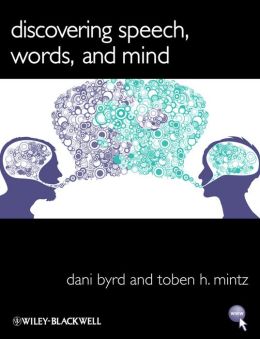
Over break I was unable to do mentor ship because I traveled to Japan and Taiwan;however, I continued to work on my senior project on the airplane and whenever I had time. I mostly "had time" on the airplane because the flight over to japan was ten hours. I brought the book I have been using for my RC called Discovering Speech, Words, and Mind. I read three chapters in this book while I was on the airplane. I will go back and do cornell notes and reread the chapters when we have RCs. 


2.  What was the most important thing you learned from what you did an why?  What was the source of what you learned?
I think that the most important thing I learned from my readings was something called the Pimsleur approach to learning a second language. The text briefly mentioned the method, but I was intrigued so I went online and researched what/who Pimsleur was. I think that this method is important because it may become one of my first answers for my EQ. Like I said before the source of this knowledge was first the book which sparked my interest and then the internet for further research.

3.  If you were going to do a 10 question interview on questions related to answers of your EQ, who would you talk to and why?
I think I would either talk to my mentor again or another Professor in the English department up at Cal-Poly that has majored in linguistics. I would interview one of them because I would like to conduct my next interview about the Pimsleur method of second language acquisition and they would be the most qualified to answer my questions.

Monday, December 30, 2013

December Post

What do linguists do under mistletoe?
Make quadrilabial clicks 
As first semester comes to a close I am quiet happy about where I am with my senior project. I finished my ENG 323 Language Acquisition course for my independent component and earned an B+. Being that the course is an upper division level course I am quite happy about my big fat B+. I learned so much from the course and am ready to apply that knowledge to my senior project to answer my essential question. My mentor is a very busy person so I have decided to also try to find another mentor somewhere else. I also plan to observe more ESL and and SL classes. I hope this new year brings joy to all! Merry Christmas and a Happy New Year!!!

Saturday, November 30, 2013

November Update

As the end of fall quarter at Cal-Poly rears it's head, my independent component will also come to a close. I have learned a lot in my ENG 323 and am excited to apply my new knowledge to the rest of my Senior project. I have my final for this class on Wednesday and have been studying Language one and Language two acquisition theories. One of the reasons I have learned so much and enjoyed the class is because of my Professor Dr. Russikoff. She is also my mentor. Lately I have been grading papers of ESL students for my mentor ship. I analyze these papers and compare them to what I am learning in class. I've have been very busy lately because of college apps however my senior projected helped me write one of my college app essays. I hope to continue exploring the world of languages. For now a fellow classmate showed me this video of a Hyper-Polyglot. I know how to speak three languages, but compared to this high school senior that isn't really impressive.

Monday, November 25, 2013

EQ


1.   I reviewed the rule of three for writing an EQ.
Essential Question
Once a topic is chosen, the student will develop a working essential question.  The purpose of the working essential question is to help the student build a strong foundation of research which will allow him or her to create an essential question that encourages depth and rigor in the chosen topic.  An essential question must:
  • Provide a framework for studies (It calls for breadth and depth of research, Is not a yes/no question)
  • Takes a stance (Allows you to argue some point, Cannot be a recitation of facts or a list)
  •  Format (It is specific, The wording makes sense)
2.  Review the following EQs and
  • Tell us if it meets the rule of 3 criteria.
  • Tell why it does or why it doesn't
 a.  What is the most important factor in healthy weight loss?
         -This EQ meets the rule of three because you can argue on why one factor of weightless is better than another, there is a lot to research on the topic because it's not a yes or no question, and the wording makes sense.

 b.  What is most important to securing a conviction in a criminal investigation?
         -This EQ meets the rule of three because there isn't one answer to the question, one can research criminal convictions to answer the question, and the question makes sense

 c.  What is most important in creating a hairstyle that best satisfies a customer?
         -This EQ meets two of the three requirements the format is correct, you can take a stance, however you can't find much evidence about hairstyle satisfaction.

 d.  How can an Anesthesiologist best treat chronic pain?
         -This EQ meets the three criteria because it calls for research of medical articles, is not a yes or no question because there are many answers and the question is formatted in a way where you know what it's asking

3.  Based on your review of the rule of 3 and your experience with assessing four EQs, please write another draft EQ for your senior project.
-What is more important in first language acquisition nature or nurture?

Wednesday, October 16, 2013

Research and Working EQ

1.  What is your working EQ?
What is the most important factor in language acquisition?

2.  What is a possible answer to your working EQ? Please write the answer in thesis format.  
-Being in an environment where one gets continual exposure to the language. Continuous exposure allows one to build vocabulary as well as acquire grammar naturally.

3.  What is the most important source you have used that has helped you come up with an answer to your working EQ? 
I believe the most important source that has helped me come up with answers to my EQ is a book called How Langauges are Learned by Nina Spada

4.  Who is your mentor, or where are you volunteering, and how does what you are doing relate to your working EQ?
My mentor is Karen Russikoff a professor at Cal-Poly Pomona. I am volunteering at Mt. Sac and Cal-Poly in ESL (English as a Second Language) classes. By observing the classes I am able to see which individuals acquire a language fast. I am also able to see the best ways to acquire a second language.

Sunday, October 13, 2013

Blog 8

"Man has an instinctive tendency to speak as we see in the babble of our young children, while no child had the distinctive tendency to bake, brew, or write." -Charles Darwin
I have ended my fifth week in my Acquisition of Language class. I am taking this class for my Independent Component 1. I have learned many things such as the IPA, the language acquisition theories, and the MLU.
I am really intrested in the class and am eager to lea

Monday, September 23, 2013

USC Interview with Dani Byrd

(USC Phonetics Research)

Last wednesday I drove all the way out to USC in LA because Dani Byrd, the Vice Dean of student affairs at the USC Dornsife college and a professor of Linguistics at USC, was kind enough to let me interview her. Dr. Byrd specializes in phonetics, the study and classification of speech sounds. She is currently using MRI's to look at how the tongue, larynx, pharynx,vocal fold, etc. move when we talk. The video of these MRI's are actually on the USC SAIL website. She showed me the difference between the movement in the mouth when people talk in different languages. For example she played an MRI that was of her mouth while she was saying an English sentence; then she played a MRI of her colleague speaking in Tamil, an Indian dialect. I found it really interesting that you could see the back of the throat being utilized more with Tamil than it was utilized in English. It was also really hard to see each individual movement of each individual part of the vocal system because speech happens really fast; therefore, by having someone sing (Shown above) instead of talk the movement is slower and the one is able to better observe the different parts of the vocal tract being utilized. She also gave me names of some computational linguists I could contact and maybe do mentor ship with.

When I asked her what books I should read that pertain to linguistics she gave me a copy of her book (pictured to the left). I have started using this book as one of my sources. Although I am not particularly interested in phonetics, it is an important aspect of linguistics. I need to understand phonetics if I want to go into computational linguistics and especially if I want to study how one can create artificial speech. Dr. Bryd told me that studying phonetics can help us understand and even correct or help with stroke victims who loose speech abilities and natural born speech impediments. My Interview with Dr. Bryd inspired to study Linguistics to help people that have speech disabilities. Her broad knowledge of so many topics also showed me how diverse of a field linguistics is because it ranges from the hard sciences to social sciences to history and everything in between.