 |
| What do linguists do under mistletoe? Make quadrilabial clicks |
Monday, December 30, 2013
December Post

Saturday, November 30, 2013
November Update
Monday, November 25, 2013
EQ
1. I reviewed the rule of three for writing an EQ.
Essential Question
Once a topic is chosen, the student will develop a working essential question. The purpose of the working essential question is to help the student build a strong foundation of research which will allow him or her to create an essential question that encourages depth and rigor in the chosen topic. An essential question must:
Essential Question
Once a topic is chosen, the student will develop a working essential question. The purpose of the working essential question is to help the student build a strong foundation of research which will allow him or her to create an essential question that encourages depth and rigor in the chosen topic. An essential question must:
- Provide a framework for studies (It calls for breadth and depth of research, Is not a yes/no question)
- Takes a stance (Allows you to argue some point, Cannot be a recitation of facts or a list)
- Format (It is specific, The wording makes sense)
- Tell us if it meets the rule of 3 criteria.
- Tell why it does or why it doesn't
-This EQ meets the rule of three because you can argue on why one factor of weightless is better than another, there is a lot to research on the topic because it's not a yes or no question, and the wording makes sense.
b. What is most important to securing a conviction in a criminal investigation?
-This EQ meets the rule of three because there isn't one answer to the question, one can research criminal convictions to answer the question, and the question makes sense
c. What is most important in creating a hairstyle that best satisfies a customer?
-This EQ meets two of the three requirements the format is correct, you can take a stance, however you can't find much evidence about hairstyle satisfaction.
d. How can an Anesthesiologist best treat chronic pain?
-This EQ meets the three criteria because it calls for research of medical articles, is not a yes or no question because there are many answers and the question is formatted in a way where you know what it's asking
3. Based on your review of the rule of 3 and your experience with assessing four EQs, please write another draft EQ for your senior project.
-What is more important in first language acquisition nature or nurture?
Wednesday, October 16, 2013
Research and Working EQ

What is the most important factor in language acquisition?
2. What is a possible answer to your working EQ? Please write the answer in thesis format. -Being in an environment where one gets continual exposure to the language. Continuous exposure allows one to build vocabulary as well as acquire grammar naturally.
3. What is the most important source you have used that has helped you come up with an answer to your working EQ?
I believe the most important source that has helped me come up with answers to my EQ is a book called How Langauges are Learned by Nina Spada
4. Who is your mentor, or where are you volunteering, and how does what you are doing relate to your working EQ?
Sunday, October 13, 2013
Blog 8
"Man has an instinctive tendency to speak as we see in the babble of our young children, while no child had the distinctive tendency to bake, brew, or write." -Charles Darwin
I have ended my fifth week in my Acquisition of Language class. I am taking this class for my Independent Component 1. I have learned many things such as the IPA, the language acquisition theories, and the MLU.
I am really intrested in the class and am eager to lea
I have ended my fifth week in my Acquisition of Language class. I am taking this class for my Independent Component 1. I have learned many things such as the IPA, the language acquisition theories, and the MLU.
I am really intrested in the class and am eager to lea
Monday, September 23, 2013
USC Interview with Dani Byrd
(USC Phonetics Research)

Last wednesday I drove all the way out to USC in LA because Dani Byrd, the Vice Dean of student affairs at the USC Dornsife college and a professor of Linguistics at USC, was kind enough to let me interview her. Dr. Byrd specializes in phonetics, the study and classification of speech sounds. She is currently using MRI's to look at how the tongue, larynx, pharynx,vocal fold, etc. move when we talk. The video of these MRI's are actually on the USC SAIL website. She showed me the difference between the movement in the mouth when people talk in different languages. For example she played an MRI that was of her mouth while she was saying an English sentence; then she played a MRI of her colleague speaking in Tamil, an Indian dialect. I found it really interesting that you could see the back of the throat being utilized more with Tamil than it was utilized in English. It was also really hard to see each individual movement of each individual part of the vocal system because speech happens really fast; therefore, by having someone sing (Shown above) instead of talk the movement is slower and the one is able to better observe the different parts of the vocal tract being utilized. She also gave me names of some computational linguists I could contact and maybe do mentor ship with.

When I asked her what books I should read that pertain to linguistics she gave me a copy of her book (pictured to the left). I have started using this book as one of my sources. Although I am not particularly interested in phonetics, it is an important aspect of linguistics. I need to understand phonetics if I want to go into computational linguistics and especially if I want to study how one can create artificial speech. Dr. Bryd told me that studying phonetics can help us understand and even correct or help with stroke victims who loose speech abilities and natural born speech impediments. My Interview with Dr. Bryd inspired to study Linguistics to help people that have speech disabilities. Her broad knowledge of so many topics also showed me how diverse of a field linguistics is because it ranges from the hard sciences to social sciences to history and everything in between.
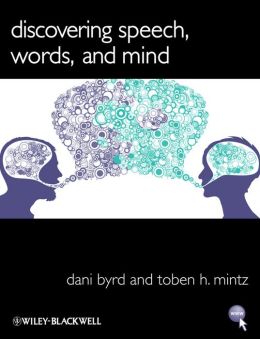
When I asked her what books I should read that pertain to linguistics she gave me a copy of her book (pictured to the left). I have started using this book as one of my sources. Although I am not particularly interested in phonetics, it is an important aspect of linguistics. I need to understand phonetics if I want to go into computational linguistics and especially if I want to study how one can create artificial speech. Dr. Bryd told me that studying phonetics can help us understand and even correct or help with stroke victims who loose speech abilities and natural born speech impediments. My Interview with Dr. Bryd inspired to study Linguistics to help people that have speech disabilities. Her broad knowledge of so many topics also showed me how diverse of a field linguistics is because it ranges from the hard sciences to social sciences to history and everything in between.
Independent Component 1 Approval

2. Discuss how or what you will do to meet the expectation of showing 30 hours of evidence.
I will Provide a transcript of the class with the my grade on it. I will also bring in any essays and/ or homework that I completed during the class.
3. And explain how what you will be doing will help you explore your topic in more depth.
This class is one of the classes that people take when they are majoring in Linguistics. The class will give me a better understanding of how a language is acquired which is a big part of Linguistics.
Subscribe to:
Posts (Atom)